
Program Profile
The Electrical and Computer Engineering (ELCE) Department was established within the College of Engineering in August 2006. Its first and main academic programme is the Bachelor of Science in Electrical and Computer Engineering. The programme welcomed its first cohort of students in October 2006.
The programme is designed and regularly reviewed to meet the current and future needs of the Kurdistan Region and Iraq for qualified electrical and computer engineers. The curriculum adheres to ABET requirements and provides a balanced foundation across both electrical and computer engineering fields. Laboratory sessions further strengthen students’ design abilities, teamwork, and hands-on technical skills.
The graduation project is a major design component of the programme, promoting creative problem-solving and effective teamwork. Internships, in turn, offer students valuable opportunities to apply their knowledge in real world settings. Internships also strengthen industry connections and help academic staff stay engaged with community needs, many of which can be addressed through students’ graduation projects.
Additionally, the programme includes a range of elective courses, allowing students to tailor their education according to their interests and evolving market demands.
Occupational profiles of graduates
Graduates of this programme are equipped with a solid foundation in both electrical and computer engineering. Their technical expertise, problem-solving abilities, and teamwork experience prepare them for diverse careers in industry, research, and technology; while ensuring they can adapt to the evolving technological and industrial demands.
Typical roles for graduates include:
- Electrical Engineer: Designing, testing, and maintaining electrical systems and equipment in sectors such as energy, construction, manufacturing and renewable energy solutions.
- Electronics Engineer: Working on circuit design, electronic devices and communication systems.
- Computer Engineer: Working on hardware-software solutions for applications in consumer electronics and IoT devices.
- Systems Engineer / Network Engineer: Planning, deploying and maintaining communication networks and IT infrastructure.
- Research and Development Engineer: Contributing to technological innovation in both electrical and computer engineering fields such as renewable energy, robotics, IoT and artificial intelligence.
- Entrepreneur / Consultant: Applying engineering knowledge to develop innovative products, provide technical consultancy or launch technology-based initiatives.
Qualification awarded
B.Sc. in Electrical and Computer Engineering
Length of programme
4 years (8 semesters)
Number of credits
240 ECTS credits
Mode of Study
Full time on campus
Read more about the programme
Get detailed information about the programme requirements, courses, credits, and educational objectives as a PDF file.



Program Educational Objectives (PEOs)
Professional Competence
Demonstrate successful careers in electrical and computer engineering or related disciplines by leveraging technical expertise, analytical skills, and innovation to effectively contribute to their professions.
Ethics & Leadership
Exhibit strong leadership, communication and teamwork skills, enabling them to work effectively within multidisciplinary teams.
Sustainable Practice
Address real-world problems and improve quality of life while upholding ethical standards and considering the broader societal, environmental, and global implications of engineering decisions.
Lifelong Learning
Engage in lifelong learning through advanced education, professional development, and certifications or other learning opportunities to adapt to evolving technologies, drive innovation, and contribute to the development of new technologies.
Program Learning Outcomes
After successfully completing this programme, students should have:
- an ability to identify, formulate, and solve complex engineering problems by applying principles of engineering, science, and mathematics.
- an ability to apply engineering design to produce solutions that meet specified needs with consideration of public health, safety, and welfare, as well as global, cultural, social, environmental, and economic factors.
- an ability to communicate effectively with a range of audiences.
- an ability to recognize ethical and professional responsibilities in engineering situations and make informed judgments, which must consider the impact of engineering solutions in global, economic, environmental, and societal contexts.
- an ability to function effectively on a team whose members together provide leadership, create a collaborative environment, establish goals, plan tasks, and meet objectives.
- an ability to develop and conduct appropriate experimentation, analyze and interpret data, and use engineering judgment to draw conclusions.
- an ability to acquire and apply new knowledge as needed, using appropriate learning strategies.
General Requirement for Completing the Program
Courses
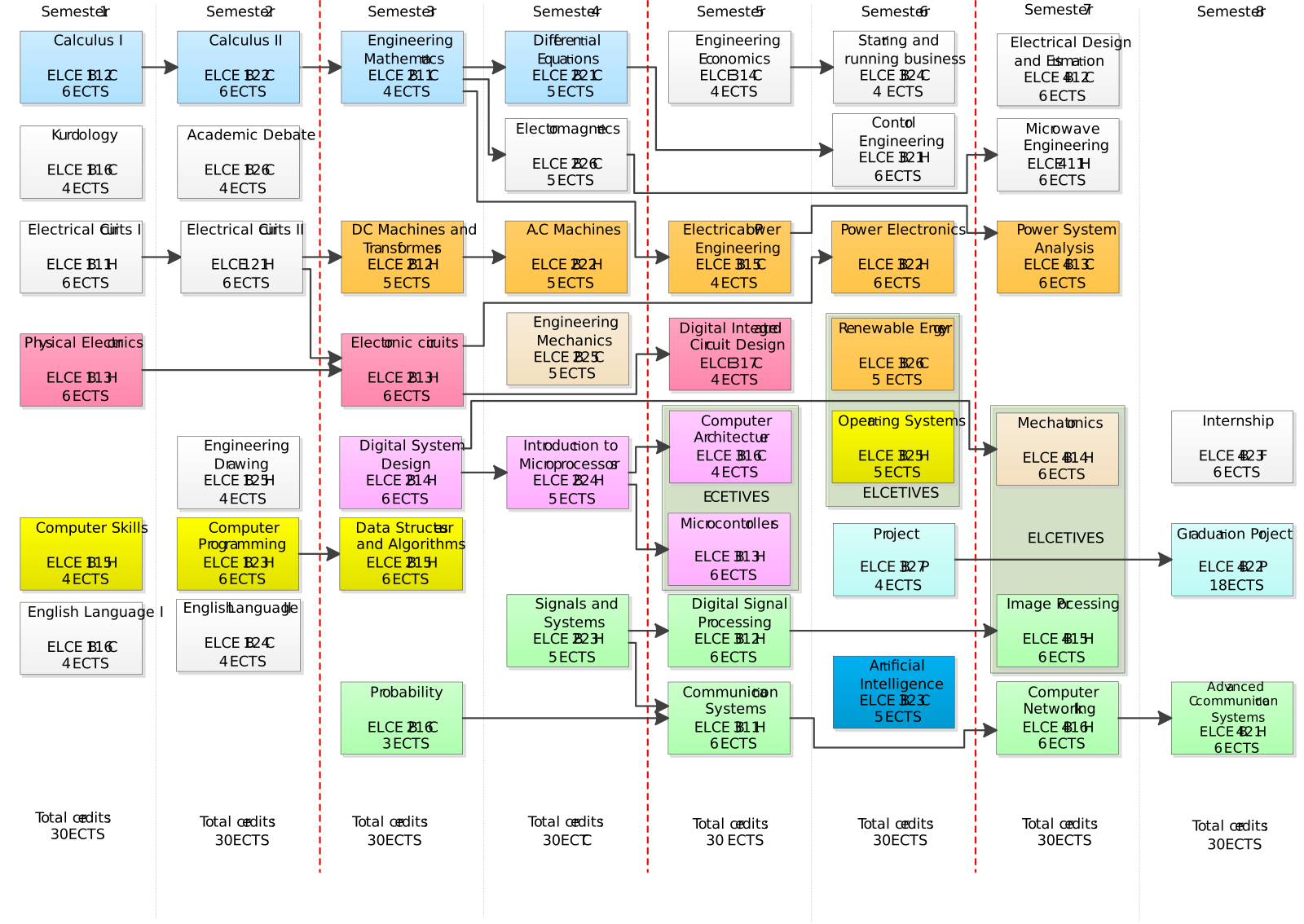
Students are required to obtain a minimum of 216 ECTS credits over the period of 8 semesters.
Graduation Project
The students have to complete a graduation project worth 18 ECTS and present a report to the department and pass an exam.
Internship
Students are required to complete a 6-ECTS internship, typically scheduled in the final semester or upon earning a minimum of 180 ECTS credits.
Programme structure diagram with credits
Programme Coordinator
Yearly Timeline
Sept. 1, 2026
⚠️ First year students start around mid-October
⚠️ First year students start exams around 20 of January
July 1, 2027
Check out the full academic calendar on UoD's webstie.
Lecturer in Electrical Engineering - Solid State Electronics
Electrical and Computer Engineering
College of Engineering
University of Duhok
Apply to the Programme
Public undergraduate admissions in the KRG region are managed centrally by the Ministry of Higher Education through the online ZankoLine portal (regayzanko.com). After Grade 12 Baccalaureate results are released, high schools provide students with unique login credentials to rank their preferred universities and B.Sc. majors during a 10–14 day registration window. Final placement is automatically determined by the student's Grade 12 average, subject choices, and department capacity.